Weight Loss or Sport?
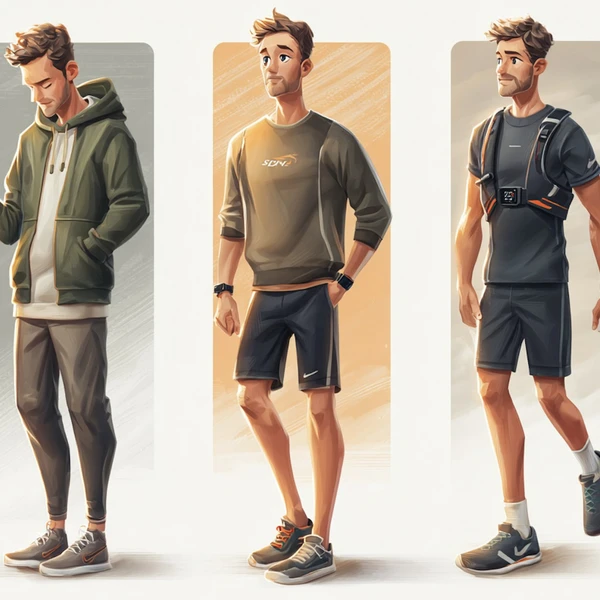
I’ve started a fairly consistent running routine, and I’m continuing my three gym sessions per week as well, assuming neither I nor my car happens to be sick. It’s not going badly, but I’m not really progressing either. Of course, two weeks isn’t a long time, but it’s long enough to decide that something needs to change.
I dove a bit deeper into the topic, reviewed my own data, and I’m trying to turn it into something that might be valuable for others too.
Weight Loss
My path to weight loss didn’t run through sport, because 42 (!) minutes of walking a day doesn’t qualify as sport. This will be important later. I started with intermittent fasting, then reduced it to one meal a day. I switched to a carnivore diet, and eventually I learned how to count calories properly. That worked for me. I did it for years.
Then came sport.
Once I had lost weight, I became capable of moving. At first less, then more and more. Last year, according to my watch, I averaged 17 hours of sport per week including yoga, stretching, warm-ups, gym sessions, running, and walking. In terms of time commitment, that already falls into a semi-professional category. Don’t laugh, but I still classified myself as a hobby athlete, even though I train 2–3 hours on weekdays. Eszter laughed at me, but she’s allowed to.
Once I realized this wasn’t just a hobby anymore, I started looking for connections between my nutrition and my training. For example, I had to face the fact that you can’t train this much without carbohydrates. This week I felt unwell during a workout and had to drink a glucose and Powerade combo. I also noticed that this year, the weeks when I drifted away from my protein-based eating pattern came quite frequently. Those temporary carb-heavy periods topped me up, and before I could “deplete” again, the next deviation came along, typically vacations, family visits, Christmas, or gym breaks.
Since I had already calculated how much I train compared to average, I also calculated my average calorie needs based on my watch data. It turned out that last year my average daily energy expenditure was around 2,600 kcal. I had been trying to live on roughly 1,000 fewer calories throughout the year. No wonder it didn’t really work.
From this came the conclusion: I set my protein and fat intake according to my target body weight, and then I fill up to the desired calorie level with carbohydrates. If my target weight is 68 kg, that means 122–150 g of protein and 54–68 g of fat per day (protein: 1.8–2.2 g/kg target weight, fat: 0.8–1.0 g/kg target weight). If I want to lose weight, I aim for 2,100 kcal; if I want to maintain, 2,600 kcal. That results in roughly 200–250 g of carbohydrates for fat loss and 350–400 g for maintenance, depending on the daily structure. Based on last year’s data, this seems realistic.
Athlete Categories
- Non-athlete: only occasional activity, or movement without progression (for example daily walking).
- Hobby athlete: 3–6 structured sessions per week toward a goal, 5–10 hours weekly.
- Semi-professional athlete: 6–10 sessions per week, regular challenges or competitions, 10–16 hours weekly.
- Professional athlete: 10+ sessions per week, 16+ hours of training, earning a living from it.
Conclusion
A sporty lifestyle requires different fuel than weight loss.
You don’t need sport to lose weight. You need a calorie deficit. If someone claims you MUST lift weights, walk 7,000 steps, or do cardio to lose weight, just shake your head and scroll on. You don’t have to exercise to lose weight.
That said, movement is part of a healthy lifestyle, and a little walking never hurts anyone.
Don’t feel bad if you can’t afford a more “optimal” diet. Money regulates everyone. Eat in a way that gives you joy, but keep boundaries. If you can, cook for yourself, use real ingredients, and avoid ultra-processed and fast food.
Basic weight-loss toolkit:
- kitchen scale
- calorie-tracking app
- bodyweight scale
Movement: walking, dancing, stationary bike, if you feel like it. Not mandatory. Spine-focused mobility work is recommended.
If you’re past weight loss and want to train, focus on mobility first. That’s your foundation. Spine mobility work is practically mandatory. One yoga session per week is better than nothing, but daily 10-minute morning mobility is more effective because it’s consistent.
After mobility comes nutritional fine-tuning. Long-distance running and 100-meter sprinting require different fuel. Now we’re talking about carbohydrate timing around workouts, chosen by absorption rate. You also need to learn when glucose, fructose, or sucrose make sense. Excess artificial sweeteners are worth reconsidering. For sport, you genuinely need carbohydrates. At this level, it’s wiser to work with a professional than to jump into internet challenges.
Intensity is unavoidable. Zone 2 builds the base, but real progress requires higher-intensity segments, even up to Zone 5, which demands structured planning, recovery, and awareness.
Basic sport toolkit:
- kitchen scale
- sports watch
- bodyweight scale
Hobby-level activities: running, cycling, gym training, swimming, etc.
Recommendations
Fasting
- For weight loss: yes
- Hobby athlete: maybe, max 16/8
- Semi-professional athlete: no
Ketogenic diet
- For weight loss: yes, with calorie tracking
- Hobby athlete: maybe, adjusted to training
- Semi-professional athlete: no
Meat + fruit diet
- For weight loss: yes, with calorie tracking
- Hobby athlete: maybe, adjusted to training
- Semi-professional athlete: no
High-carbohydrate diet
- For weight loss: yes, with calorie tracking
- Hobby athlete: yes, adjusted to training
- Semi-professional athlete: yes
Sugar substitutes
- For weight loss: yes, in moderation
- Hobby athlete: yes, in moderation
- Semi-professional athlete: no
A few hours of Zone 2 per week
- For weight loss: yes
- Hobby athlete: yes
- Semi-professional athlete: yes
Several hours above Zone 2
- For weight loss: not necessary, may even backfire
- Hobby athlete: yes, depending on the sport
- Semi-professional athlete: yes, depending on the sport
Supplements
- For weight loss: not necessary
- Hobby athlete: yes
- Semi-professional athlete: yes
Translations:
| Next | Previous |
| Small Steps | 2025 Wrap-Up |